
Key Takeaways
- Private Pilates sessions in NYC can run as high as $375 per hour – but the personalization and results can justify the premium depending on your goals.
- Group classes are the more budget-friendly entry point, ranging from $25 to $75 per session, but come with real trade-offs in individual attention.
- Most studios recommend a hybrid approach: start private, then blend in group classes for ongoing practice.
- The right format is determined by what your body, goals, and schedule actually need – not by price alone.
Choosing between private and group Pilates is a fitness strategy decision as much as a budget one. In cities like New York, Los Angeles, and South Miami, studios offer a wide range of session formats, and the gap between the cheapest group class and a top-tier private session can be hundreds of dollars per visit. Understanding what each format delivers – and where it falls short – makes the decision considerably clearer.
NYC Pays Up to $375 Per Session – Is It Worth It?
New York City is home to some of the most expensive Pilates sessions in the country. Private one-on-one instruction typically runs between $125 and $375 per hour, depending on the studio, instructor experience, and location.
Studios across the city position private sessions as the fastest path to real, measurable results. For clients with injuries, postural issues, or specific performance goals, that logic holds up. Natural Pilates, who offer expert-led instruction across these markets, explains that the more targeted approach offered by private lessons can be a good starting point for beginners too. Once they become more familiar with postures and equipment, progress in a group class becomes easier to attain.
What You Actually Get in a Private Session
Private Pilates is built around one idea: the session fits you. That sounds simple, but the practical difference is significant.
Customized Programming and Full Equipment Access
In a private session, the instructor designs your workout around your specific goals, movement patterns, and limitations – not a general template. Fully equipped Pilates studios give private clients access to the complete range of apparatus: the Reformer, Cadillac, Wunda Chair, and more. That variety enables progressive, targeted programming that builds strength, mobility, and coordination in ways that a mat-based or limited-equipment group class cannot replicate. The session evolves as you do.
Continuous Technique Corrections
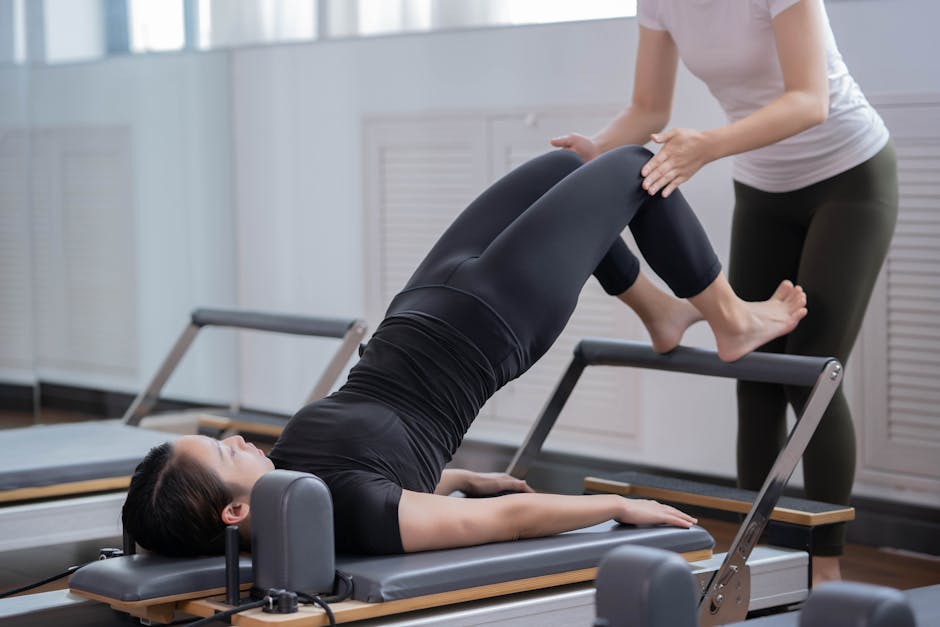
Pilates is precision-based. Foot placement, pelvic alignment, spring resistance, and breathing patterns all affect which muscles are actually doing the work. In a group class with 10 or more participants, an instructor can catch major errors – but they cannot watch every rep, every person, every transition. Private sessions deliver real-time feedback on every movement, which prevents poor habits from forming and helps clients feel the difference between doing an exercise and doing it correctly. This is especially valuable for beginners still learning the fundamentals.
Pace Set by You, Not the Class
Group classes move at a shared tempo. That pace might feel too fast for a beginner still figuring out the Reformer, or too slow for an experienced client ready for more complex sequences. Private sessions remove that constraint entirely. An instructor can slow down on a foundational movement, skip exercises that don’t serve the client’s goals, and introduce progressions when the client is actually ready – not when the class timetable dictates.
Group Classes: The Real Trade-Offs
Group Pilates is popular for good reason. It’s accessible, social, and offers solid guided instruction. Going in with clear expectations helps clients get the most from it.
Lower Cost and Varied Scheduling Options
The affordability of group classes is the headline benefit. Across NYC, LA, and South Miami, group sessions can drop to around $25 per class when purchased in larger packs. Most studios run morning, midday, and evening slots, making it easier to find consistency without rearranging a schedule. The drop-in or class-pack format also reduces commitment pressure – clients can rotate between instructors, class styles, and even studios.
There’s also a social dimension worth acknowledging. Group class energy – working alongside others with similar goals – can be genuinely motivating. Accountability builds naturally when familiar faces expect to see you show up.
Where Group Classes Fall Short
The limitations are real. With one instructor managing multiple participants, individual corrections are limited, especially in larger classes. Programming follows a fixed sequence designed to work for most people, which means it may not be ideal for anyone with specific injury history, asymmetries, or advanced goals. Equipment variety is also typically reduced; many group reformer classes use a narrower set of exercises to keep transitions smooth for the whole room. Over time, this can make sessions feel repetitive for clients who are actively trying to progress.
Who Should Choose Private Sessions?
Private Pilates suits anyone whose goals require more than a general class can provide. The clearest candidates include:
- Beginners who want to learn proper form before joining a group class
- Clients recovering from injury or managing chronic pain, where generic programming could cause setbacks
- Experienced practitioners who have plateaued in group settings and need targeted progression
- Anyone with specific goals – posture correction, athletic performance, post-partum recovery – that a standard class template doesn’t address
- Clients with scheduling constraints who can’t reliably commit to fixed class times
Long-term practitioners frequently cite private sessions as worth the premium, specifically for the tailored corrections and deeper understanding of movement that group classes can’t consistently provide.
The Hybrid Approach Most Studios Recommend
Most experienced Pilates instructors don’t frame this as a binary choice. The most common recommendation is a hybrid model: start with a handful of private sessions to build a solid foundation – proper form, equipment familiarity, and a sense of your personal movement patterns – then transition into regular group classes to maintain momentum and keep costs manageable.
From there, many clients book occasional private sessions monthly or quarterly to check technique, work through plateaus, or introduce new progressions. This approach balances personalized coaching with the affordability and social energy of group training, and it’s the structure most studios across NYC, LA, and South Miami actively encourage.
Your Goals, Not the Price Tag, Pick the Format
Private sessions deliver more attention, more customization, and more direct feedback. Group classes deliver consistency, community, and cost-efficiency. Neither is universally better. The deciding factor is always what a specific client actually needs right now.
Someone new to Pilates with a lower back issue and a goal of reducing pain will get far more from private sessions than from dropping into a general reformer class. Someone who has solid fundamentals and just wants to maintain a weekly practice will do well in a group setting. Plenty of clients thrive using both, rotating formats as their goals and budgets shift over time.
The pricing gap between formats is real – but so is the difference in outcomes. Matching the format to the goal is what makes the investment, at any price point, worth it.
Natural Pilates
28 West 22nd Street
New York
New York
10010
United States


