Originally Posted On: https://www.theboxery.com/blog/how-subscription-brands-are-standardizing-on-wholesale-cardboard-boxes-to-scale-faster/
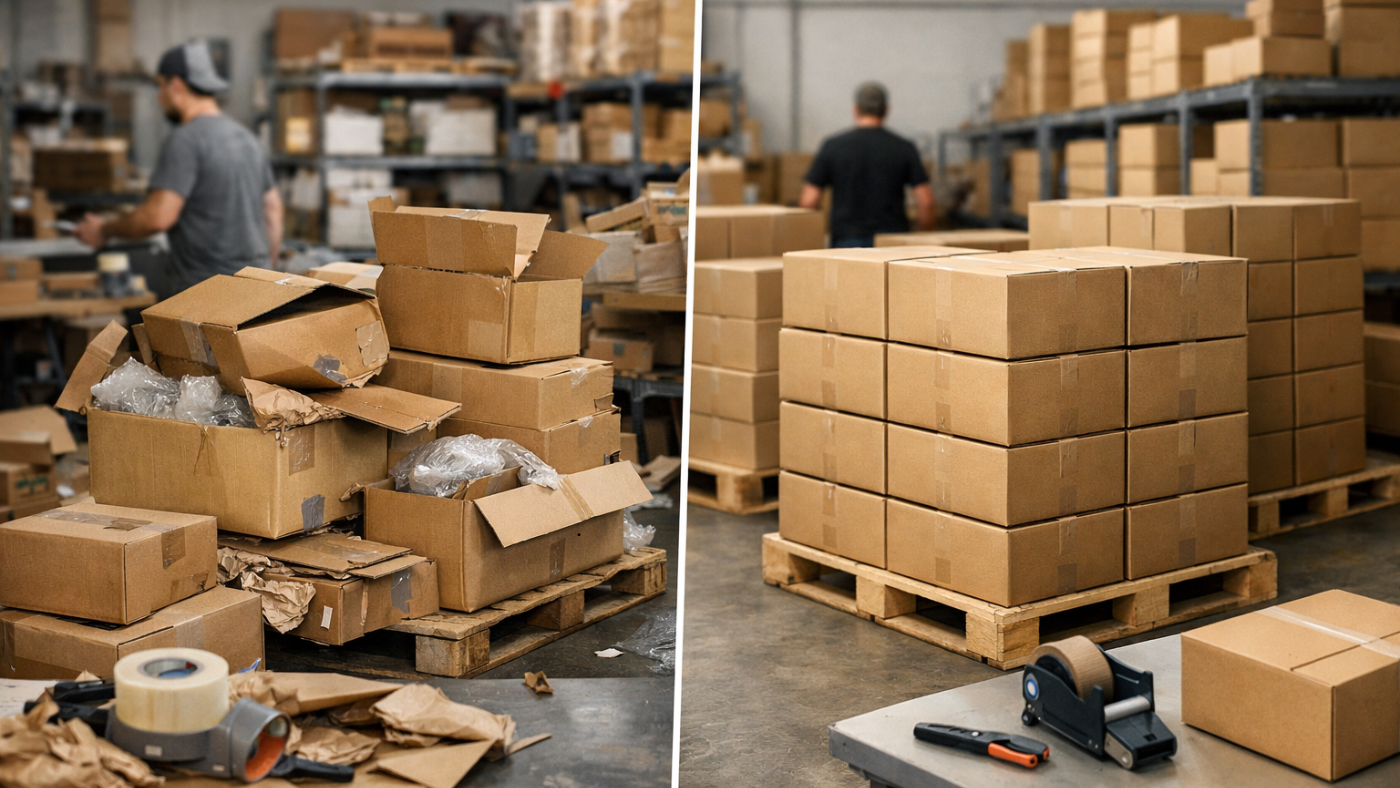
Key Takeaways
- Standardize wholesale cardboard boxes around a few recurring corrugated sizes so subscription teams cut pick time, reduce mistakes, and keep packing stations moving.
- Match box dimensions to the actual product set, not the wish list, because dimensional weight can turn a small shipment into a large shipping bill fast.
- Compare single-wall and double-wall cardboard based on product weight, crush risk, and return rate instead of buying every box as if it were the same job.
- Build reorder points from weekly ship rates and case usage, then store flat boxes and backup sizes so inventory doesn’t choke the fulfillment floor.
- Price out wholesale cardboard boxes against retail packs, U-Haul-style moving boxes, and Uline catalog pricing using landed cost, not sticker price alone.
- Use printable, white, black, or decorative custom corrugated boxes where branding matters, but keep the packaging task simple enough that labor doesn’t creep up with every order.
Subscription brands don’t lose margin in dramatic ways. They lose it in six-cent mistakes, one bad size choice, and the pile of extra air they keep shipping to customers. That’s why so many operators are standardizing on wholesale cardboard boxes instead of treating packaging like an afterthought. A box that fits the product set, the insert, and the shipping method does more than protect the goods. It cuts handling time. It keeps dimensional weight from creeping up. And it makes reorder planning a lot less chaotic.
For a fulfillment manager, the appeal is plain. One corrugated format is easier to count, easier to store, — easier to train around than a rotating mix of retail cartons, uhaul-style moving boxes, and last-minute nearby buys that never quite match the product. A sturdy 8x8x8 cube might be perfect for one SKU. A flat, printable mailer might beat a larger carton for another. Get those choices wrong, and the shipping task gets expensive fast. Get them right, and the whole operation stops fighting its own packaging.
Why wholesale cardboard boxes are becoming the default choice for subscription brands
Almost 8 out of 10 subscription teams now standardize box sizes before they standardize inserts. That sounds backward. It isn’t. A fixed carton list cuts pick-pack decisions, keeps DIM weight predictable, and makes reorders less chaotic.
Standard box formats cut packaging decisions from every order cycle
Wholesale cardboard boxes help teams lock in small, medium, and large pack-out paths without hunting for a nearby fit on every order. An 8x8x8 cube for one SKU, a flat white mailer for another, a double-wall option for brittle or antique items — that mix covers most shipping tasks. Less bump in the workflow. Fewer mistakes.
Bulk buying lowers the per-box price and protects margins at higher volume
Cardboard boxes in bulk usually beat retail by a wide margin, and subscription math cares about pennies. A 3-cent drop per unit saves $300 across 10,000 shipments. That’s real margin. Buyers comparing cheap wholesale cardboard boxes, wholesale cardboard shipping boxes, or wholesale moving boxes should compare landed cost, not shelf price.
Corrugated consistency reduces damage, rework, and customer complaints
Bulk cardboard shipping cartons give teams repeatable crush strength, cleaner closure, and fewer surprise failures during retail pick windows. A cardboard boxes wholesale supplier that keeps wholesale shipping cartons and wholesale corrugated boxes in steady stock makes planning easier. The Boxery also fits that model with business cardboard boxes, bulk packing boxes, wholesale packaging boxes, and discounted cardboard boxes in bulk for brands that buy cardboard boxes wholesale and need the same result every week.
How to choose the right cardboard box size, strength, and finish for recurring shipments
What’s the fastest way to cut shipping waste without making orders look cheap? Start with box fit. For brands sending the same SKU mix every week, wholesale cardboard boxes should match the product set closely enough to keep void fill low and dimensional weight from creeping up. A 12x9x4 mailer beats a larger retail carton for soft goods. Every inch matters.
For recurring shipments, the math is blunt. A box that’s 20% too large can push a parcel into a higher rate band, and that bump shows up on every label. Bulk cardboard boxes make more sense once order volume hits a few hundred units a month, especially for teams standardizing pack-out rules.
Match box dimensions to product sets to reduce dimensional weight charges
Use a short-size ladder: small, medium, or large. That keeps picking simple and reduces the “nearby — not quite” problem that slows down fulfillment. Brands shipping books, apparel, or decorative items often do better with flat cartons or 8x8x8 cubes than with one oversized catch-all box.
Compare single-wall, double-wall, and heavy-duty corrugated for product weight
Single-wall corrugated fits most lightweight retail orders.
Double-wall is the better call for wine, antique parts, or heavier boxed sets that can take a bump in transit. Heavy-duty triple-wall is for the product that truly earns it, not for routine retail use.
Not complicated — just easy to overlook.
bulk packing boxes, box wholesale distributor, and wholesale boxes for e-commerce all point to the same practical move: buy for the SKU mix you ship every day, not the one-off outlier.
Use white, black, decorative, or printable boxes to fit the brand without overpacking
Finish matters, but it shouldn’t force oversizing. White — printable cartons suit retail presentation; black or decorative boxes work for premium subscription shipments; plain brown stays cheapest and usually ships best. Brands comparing wholesale corrugated boxes, wholesale shipping cartons, and wholesale packaging boxes should treat finish as a branding decision, not a license to pack loose.
What subscription operations should watch for in storage, handling, and replenishment?
Storage bites back fast. A brand shipping 800 kits a week can burn through floor space in days if it buys the wrong mix of wholesale cardboard boxes, especially when flat inventory sits in the packing zone and turns every pallet move into a bump-and-grind task.
Plan case quantities around weekly ship rates and reorder points. A cardboard boxes wholesale supplier should support that math, not fight it, and wholesale shipping cartons need to arrive before the last 20% of stock disappears. For brands comparing wholesale corrugated boxes, the real test is simple: does the box stay available when a promo hits?
Store flat cardboard inventory to free up floor space in the fulfillment area. That matters more than people admit, because cardboard boxes in bulk can crowd out tape, labels, and a clean pack-out lane. A box wholesale distributor that ships compact, stackable cases makes the difference between a tidy operation and a warehouse that feels like a moving day.
Keep backup sizes for spikes, seasonal kits, and product swaps. A subscription team might use bulk packing boxes for the standard kit, then pull in wholesale moving boxes or wholesale packaging boxes for a one-off antique item, a wine club launch, or a black-and-white gift set that needs a printable outer shipper.
It’s a small distinction with a big impact.
- Use bulk cardboard boxes for the core SKU.
- Hold business cardboard boxes bulk for forecasted surges.
- Buy cardboard boxes wholesale only after testing fit, rate, and crush strength.
- Watch for cheap wholesale cardboard boxes that save pennies but raise damage claims.
In practice, wholesale boxes for e-commerce work best when the supplier can cover refill orders without drama. That’s where discounted cardboard boxes bulk from The Boxery fit the model, especially for teams that want wholesale cardboard shipping boxes without overbuying. The result is less dead stock, fewer emergency buys, and a cleaner path from forecast to ship date.
Where wholesale cardboard boxes beat retail, nearby pickup, and one-off sourcing on price and speed
Write this section as if explaining to a smart friend over coffee — casual but accurate and specific. For subscription brands, wholesale cardboard boxes usually win because the landed cost is lower and the clock doesn’t get wrecked by last-minute buying. Retail packs look cheap until the math includes extra handling, repeat runs, and a 9 p.m. emergency order.
Wholesale shipping cartons cut that chaos fast, and cheap wholesale cardboard boxes can keep a 500-unit month from turning into three retail store runs and a stack of wasted filler. The Boxery’s bulk model matters here because fast replenishment beats nearby pickup when the warehouse team is already behind.
Buying cardboard boxes wholesale is the smarter move once a brand ships the same SKU 200 times a week. A box wholesale distributor with deep stock can hold the line on price, while wholesale shipping cartons in standard sizes like 8x8x8 or medium flats reduce dimensional weight — tape use.
Practical rule: standardize 3 box styles first, then test a fourth only if breakage or void fill keeps creeping up.
- Use wholesale corrugated boxes for core SKUs.
- Keep the cardboard boxes wholesale supplier pricing locked before peak season.
- Reserve wholesale moving boxes for heavier or awkward kits.
That’s how bulk cardboard boxes, cardboard boxes in bulk, bulk packing boxes, wholesale cardboard shipping boxes, bulk cardboard shipping cartons, wholesale packaging boxes, discounted cardboard boxes bulk, business cardboard boxes bulk, and wholesale boxes for e-commerce turn packaging from a task into a repeatable system. Cheap isn’t the point. Predictable is.
How to scale faster with custom, branded, and printable corrugated boxes
A subscription brand ships 3,000 orders a month in plain brown cartons. Returns are fine, but repeat purchases are flat because the unboxing feels forgettable. Swapping to wholesale cardboard boxes with a print-ready white outer turns that same packing task into a repeatable customer touchpoint.
For teams comparing a cardboard boxes wholesale supplier, the real question isn’t just price. It’s whether the box size, print surface, and corrugated strength match the product mix without adding a bump to dimensional weight. Wholesale corrugated boxes and wholesale cardboard shipping boxes give operators a cleaner way to standardize from small launch runs to larger monthly fulfillment.
Turn plain packaging into a repeatable customer experience without changing the packaging task
One box size, one tape pattern, one insert. That’s the move. Bulk cardboard boxes let the team keep the same packing motion while the outside does more work: branded tape, printable labels, and a black or white finish that matches the product line.
Use branded inserts, labels, and outer cartons to support subscription retention
With wholesale packaging boxes, the outer carton can carry the brand while inserts handle the upsell, reorder reminder, or product guide. A box wholesale distributor should also support bulk packing boxes and cardboard boxes in bulk, because replenishment delays break the monthly cadence fast.
And that’s where most mistakes happen.
For smaller test launches, discounted cardboard boxes bulk, cheap wholesale cardboard boxes, wholesale moving boxes, wholesale boxes for e-commerce, and wholesale shipping cartons can all sit in the same plan. The honest answer is simple: buy cardboard boxes wholesale when volume is predictable, then adjust by rate as SKU counts grow. The Boxery fits that model, and so do business cardboard boxes bulk orders that need speed without waste.
Build a box strategy that can handle growth from small launches to larger monthly fulfillment
Start with 8x8x8, medium mailer-style cartons, and a few decorative or insulated options for fragile or antique items. Then expand the carton library only where damage, storage, or fulfillment time proves it’s needed.
- Match box size to product, not to leftover space.
- Keep printable options ready for seasonal drops.
- Review DIM weight every quarter.
Frequently Asked Questions
What should an operations manager look for in wholesale cardboard boxes?
Start with the fit, then check the corrugated strength. A box that’s too large pushes up shipping rates through dimensional weight, and a box that’s too weak turns into returns and damage claims. For most e-commerce shipments, the best buy is the smallest sturdy carton that still gives the product room to survive transit.
Are wholesale cardboard boxes always cheaper than retail boxes?
No, not always on the sticker price, but usually on total landed cost. Bulk orders cut unit price, and they usually reduce the emergency buys that wreck margin. If a supplier also offers free shipping on certain mailers or flat freight on large orders, the math gets even better.
What size box is most common for shipping products online?
There isn’t one universal size, but 8x8x8, 12x12x12, and 16x12x12 show up often because they handle a lot of small and medium items. The right answer depends on product shape, void fill, and whether the item ships retail-ready or needs a protective inner pack. For apparel or soft goods, a flat mailer can beat a box every time.
How does corrugated strength affect box performance?
It matters a lot. A standard single-wall carton can handle light to medium loads, while double-wall boxes are the safer pick for heavier or more fragile product lines. If the load is dense, awkward, or stacked on pallets, cheap cardboard is the wrong place to save money.
Can wholesale cardboard boxes be custom printed?
Yes, and that matters more than a lot of teams think. Custom boxes turn plain packaging into a visible brand touchpoint, especially for subscription, decorative, white, or printable retail packs. If the brand ships enough volume, printing can be worth it because the box does part of the marketing work for you.
How do I avoid oversized packaging charges?
Measure the product packed for shipment, not the product alone. Then choose the smallest carton that allows for protection without bumping the dimensional weight into a higher rate tier. This is where right-sized corrugated boxes beat the “close enough” habit that costs money on every order.
This is the part people underestimate.
What’s the difference between moving boxes and shipping boxes?
Moving boxes are built for household loads and rough handling, while shipping boxes are chosen around product fit, carrier rates, and pack-out speed. You can use either in a pinch, but they’re not the same task. A box that works for a couch lamp isn’t always the best choice for a retail order.
Are white boxes better than brown cardboard boxes?
Not better, just different. White boxes look cleaner and work well for retail presentation, while brown corrugated is usually the practical pick for bulk shipping and warehouse handling. If the box won’t be seen by the customer, paying extra for white can be wasted spend.
How should boxes be stored in a warehouse?
Keep them flat, off the floor, and away from moisture. Cardboard loses stiffness when it absorbs water, and bad storage turns sturdy stock into unreliable stock. The honest answer is simple: treat packaging like inventory, not filler.
What if my product mix keeps changing?
Then box assortment matters more than a single cheap case. Growing brands usually need a mix of small, medium, and large cartons, plus mailers for flat items and a few heavy-duty options for dense SKUs. That’s why wholesale cardboard boxes work best when the supplier carries depth, not just one or two common sizes.
Subscription brands don’t scale on guesswork. They scale on repeatable packouts, predictable costs, and packaging that doesn’t force a new decision on every order. Standard box sizes cut waste from the process. Right-sized corrugated keeps dimensional weight charges from chewing through the margin. And buying wholesale cardboard boxes gives operators a cleaner cost base once order volume stops being a side note and starts driving the business.
The real edge is consistency. A box that fits the product set, holds up in transit, and stores without eating the whole packing area saves time in three places at once: receiving, fulfillment, and reorder planning. That’s the part teams feel first. Fewer exceptions. Fewer damaged shipments. Fewer last-minute scrambles.
The next step is straightforward: audit the top three subscription SKUs, match each one to a box size and strength rating, then compare the landed cost of wholesale cardboard boxes against current retail sourcing. If the numbers still look close, the packout probably isn’t tight enough yet.