
Originally Posted On: https://www.marconitech.com/2026/07/09/how-to-align-arc-systems-specs-with-fire-code-updates-in-new-york-ny/
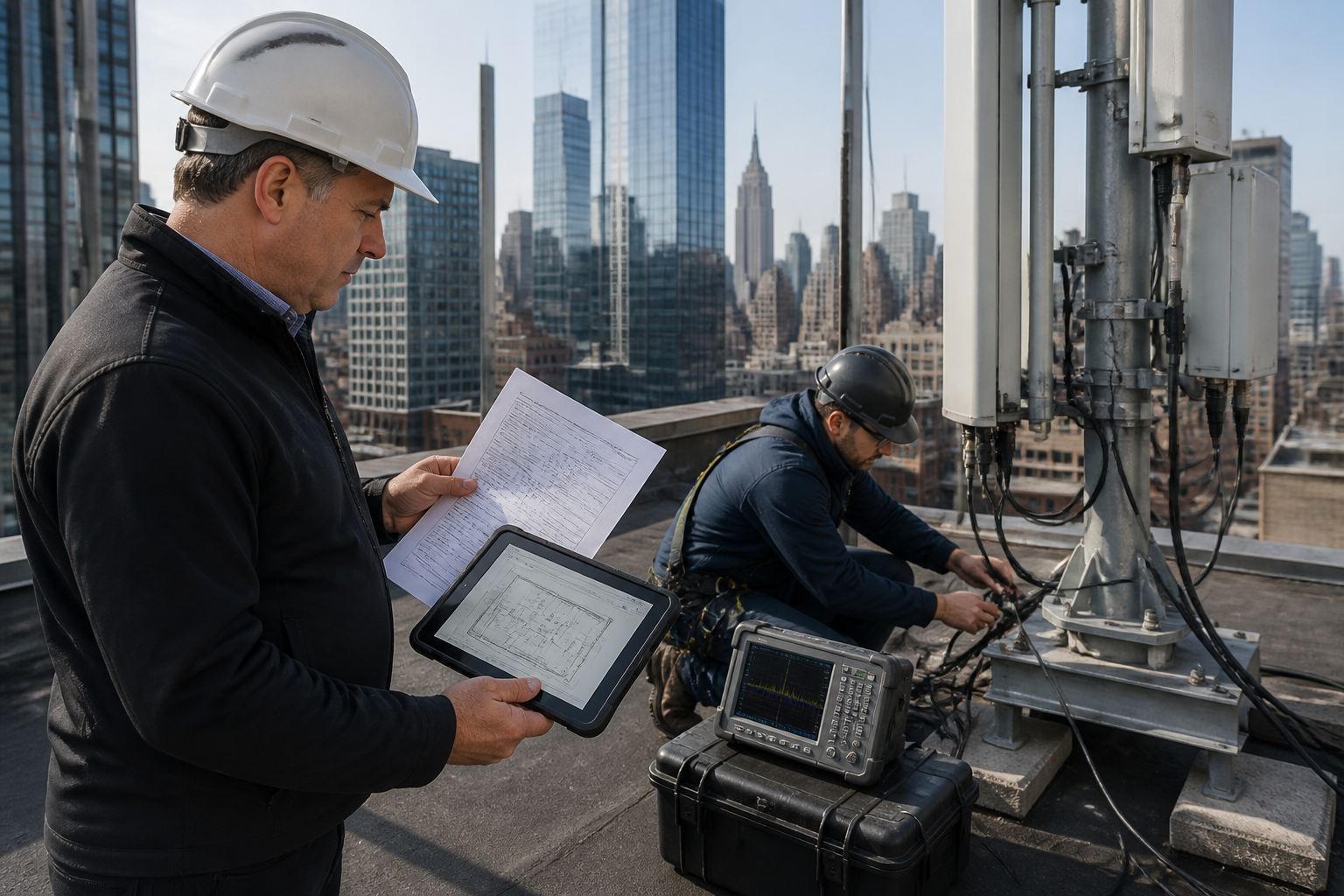
Before you touch a spec sheet, get these items on hand. Skipping any of these usually means a second trip to the roof — or a second call to your FDNY inspector.
-
Current FDNY ARCS permit and prior inspection reports for the building
-
Radio coverage survey (2524A) results from your last commissioning
-
As-built drawings showing antenna, cabling, and equipment room layout
-
Updated FDNY code language for the current cycle (check with your local FDNY liaison or borough office)
-
List of installed components — repeaters, amplifiers, battery backup, monitoring units
-
Access to mechanical and telecom rooms, plus roof access for antenna checks
-
A licensed low-voltage or fire alarm contractor familiar with FDNY-approved equipment
-
Signal test equipment (spectrum analyzer or equivalent) for verifying coverage
-
Basic knowledge of RF fundamentals — frequency bands, signal loss through steel and concrete, modulation basics
-
Contact info for your FDNY inspector or AHJ representative
-
Time estimate: 2–4 weeks for document review and testing, plus 1–2 weeks for FDNY sign-off scheduling
Got all that? Good. Now let's walk through confirming where your building actually stands.
FDNY updates the ARCS requirements more often than most building teams realize — and a code cycle you missed six months ago can quietly fail your next inspection. If you manage fire safety for a high-rise anywhere from the Financial District to Midtown, you already know that arc systems aren't optional equipment tucked away in a closet. They're the dedicated radio backbone firefighters rely on when steel and concrete swallow ordinary signal.
Here's the problem: coverage reports get filed once, then forgotten. Meanwhile, the FDNY keeps refining 2524A language, equipment approval lists shift, and buildings that passed in 2022 sometimes don't pass in 2026. This guide walks compliance managers through exactly how to check current specs against the latest code, spot the gaps before an inspector does, and get sign-off without a second visit. Realistically, that's the difference between a smooth inspection day and a violation notice sitting on your desk.
What You'll Achieve and What You Need Before You Start
Picture a 42-story residential tower in Kips Bay mid-renovation, and the fire safety director just got a letter from the FDNY flagging outdated radio coverage documentation. That's the moment most compliance managers realize their arc systems paperwork hasn't kept up with the latest code cycle. By the end of this process, you'll have a signed-off, inspection-ready system that matches current FDNY 2524A requirements — not a patchwork of old permits and guesswork.
Here's what most people miss: alignment isn't a one-time task. It's an ongoing check between your building's radio infrastructure and whatever FDNY updates next. And that's exactly why building owners across Manhattan and Brooklyn are turning to ARCS systems in NYC engineered specifically for dense steel-and-concrete construction rather than generic national amplifier setups.
Documents and Site Data to Gather First
Before calling an engineer, pull together:
-
Prior FDNY test reports and acceptance letters
-
Current floor plans showing steel/concrete density
-
Radio frequency band records (UHF, VHF, 700MHz, 800MHz)
-
Building permit history and certificate of occupancy status
Step 1: Confirm Your Building's Current FDNY ARCS Classification
Most high-rise teams skip this step and pay for it later. Before you touch any equipment specs, pull your building's most recent fire safety plan and check whether FDNY has flagged it for an arc system upgrade or a straight replacement. Buildings built before certain code cycles often carry legacy classifications that no longer match current signal requirements — that gap is where inspections fail.
Checking 2524A Coverage Requirements for Your High-Rise
Call your local FDNY Bureau of Fire Prevention liaison and ask directly which subsection applies to your address. Steel-heavy buildings in Midtown and Lower Manhattan frequently need denser coverage mapping than newer glass towers in Long Island City.
-
Pull your last commissioning report and check the date against current code cycles
-
Compare floor plans against original antenna placement drawings
-
Confirm whether your system was tested under older 2524 language or the current 2524A standard
If you're unsure where to start, this auxiliary radio communication systems overview breaks down what FDNY actually checks floor by floor.
Step 2: Compare Your Existing Radio Coverage Report Against the Updated Code Language
When was the last time you actually reread your coverage report line by line instead of skimming the summary page? Most compliance managers pull the old survey, check the pass/fail box, and move on. That's how gaps slip through. Pull the report your vendor filed after your last auxiliary radio communication installation, linked here for reference on auxiliary radio communication installation, and line it up against the current code text section by section.
Where Steel and Concrete Construction Change the Math
Older Manhattan and Financial District towers built with dense steel frames and thick concrete slabs absorb signal in ways a coverage report from ten years ago never accounted for. Frequency loss through rebar-heavy floors isn't uniform, so your building's basement, stairwells, and elevator shafts each need separate readings.
Buildings that already went through modular NYC ARCS upgrades for facility managers tend to fare better here, since staged hardware swaps make it easier to retest problem zones without ripping out the whole system. Facility teams comparing options should review modular NYC ARCS upgrades for facility managers before signing off on any retrofit plan.
Step 3: Match System Components to the Latest FDNY-Approved Equipment List
Roughly 40% of failed FDNY inspections on Manhattan and Brooklyn high-rises trace back to one issue: outdated hardware still listed on a filing from three years ago. That gap between what's installed and what's currently approved causes more re-inspection headaches than any wiring defect.
Start by pulling the current equipment roster and checking every repeater, antenna, and battery backup against it line by line. An auxiliary radio communication system that passed inspection in 2022 might not clear a 2026 walkthrough if the panel model was quietly discontinued.
Frequency band coverage matters too — FDNY reviewers check UHF and 800MHz performance separately, not as a bundle.
-
Cross-check antenna monitoring against the current 2524A list
-
Confirm battery runtime meets the newest standby requirement
-
Verify signal strength logs from your last annual test
For buildings juggling steel-and-concrete signal loss, proper bidirectional amplifier design commissioning in New York makes the difference between a clean sign-off and a violation notice.
Step 4: Schedule Testing, Documentation, and FDNY Sign-Off
Most building teams assume passing a bench test means passing FDNY sign-off. That's just not true. Field acceptance testing under actual building conditions is a separate hurdle, and a lot of ARC systems get flagged not because the hardware failed, but because the paperwork didn't match what inspectors found on-site.
Get your documentation lined up before the walk-through: as-built drawings, signal grid maps, battery backup calculations, and antenna placement records. Any qualified emergency responder radio system installation should include commissioning reports that FDNY inspectors expect to see on day one — not requested three weeks later.
Common Mistakes That Cause Failed Inspections
-
Signal strength readings taken at ground level, ignoring upper floors or stairwells
-
Battery backup tested for 12 hours instead of the required 24
-
Missing labels on the control panel or unclear zone maps
-
No coordination with the fire alarm contractor on interconnection points
Fix these before scheduling, and you'll avoid a second visit — and a second bill.
Verifying Compliance and Planning for the Next Code Cycle
Picture a Midtown high-rise team pulling out a five-year-old radio coverage report during a renewal walkthrough, only to find the FDNY inspector shaking his head at outdated frequency notes. That's a bad afternoon, and it's avoidable. Verification isn't a one-time box to check — it's an ongoing habit tied to New York's code review cycles.
Start with a fresh signal survey covering every stairwell, elevator bank, and basement pump room. Compare current readings against your last commissioning report. If the numbers drifted, don't wait for a violation notice.
Build a standing checklist:
-
Annual battery and power supply inspection
-
Signal strength retest after any structural renovation
-
Documentation review whenever FDNY updates coverage thresholds
-
Confirmed maintenance contact for 24/7 troubleshooting
For buildings weighing a system refresh, an ARC system for FDNY compliance gives directors a documented, inspection-ready baseline instead of guesswork. Set a calendar reminder now — the next code cycle won't wait, and neither should you.
How long does it take to bring an ARCS install into compliance with a fire code update?
Most Manhattan and Brooklyn high-rises need 6 to 10 weeks from initial coverage survey to FDNY sign-off, depending on how many floors fail the updated signal thresholds. Older buildings with thick concrete shear walls often run closer to 12 weeks because retesting takes longer.
Do I need a new radio coverage survey every time FDNY updates the code?
Yes — if the update changes signal strength thresholds or coverage area definitions, your existing survey is no longer valid proof of compliance. A fresh test, even a partial one focused on problem floors, is the only way to satisfy an inspector.
What's the biggest reason ARCS retrofits fail inspection on the first attempt?
Outdated antenna placement paperwork. Inspectors want documentation that matches exactly what's physically installed, and buildings that swapped equipment without updating as-built drawings almost always get flagged.
Can I keep older ARCS components after a code update, or do I have to replace everything?
You can usually keep components that are still on FDNY's approved equipment list, but anything discontinued or superseded needs swapping out. Check the current list before assuming your existing hardware still qualifies — this changes more often than building owners expect.
Is it safe to run partial testing while tenants are still occupying the building?
Yes, testing itself doesn't disrupt life safety systems, but you'll want to notify building management — schedule around fire drills or other life safety testing already on the calendar. Coordinate with your fire safety director so nothing overlaps.
What happens if my building misses the compliance deadline after a code update?
You risk violations and, in some cases, a stop-work order on other permits tied to the property. The honest answer is FDNY doesn't grant much grace here — getting ahead of the deadline with a licensed ARCS contractor is always cheaper than scrambling after a violation notice.
Fire code updates don't wait for anyone, and neither should a building's ARCS documentation. A director who checks the FDNY classification, re-runs coverage against 2524A, and keeps equipment lists current isn't just avoiding fines — they're closing the gap between what's on paper and what actually happens when a firefighter keys a radio mic in a stairwell. That gap is where inspections fail.
Steel-and-concrete high-rises across Manhattan and the outer boroughs will keep changing the signal math every time a code revision lands. Treat that as the new normal, not an exception. Build a testing and documentation rhythm — annual reviews, updated coverage reports, a relationship with your FDNY contact — so the next code cycle is a formality instead of a scramble.
Get this wrong, and you're looking at delayed sign-offs, re-testing costs, and a building that's technically out of compliance in the meantime. Get it right, and your arc systems become one less thing keeping you up at night.
Pull your current coverage report today and compare it against the latest 2524A language before your next inspection cycle lands on the calendar.
Why Engineers Say Arcs Systems Matter More in New York, NY
Key Takeaways One failed radio test can stall signoff for weeks. In New York, that isn’t a paperwork headache; it’s an occupancy problem, a turnover problem, and sometimes a patient-safety problem. That’s why arcs systems keep coming up earlier in design meetings for high-rises, hospitals, and large commercial buildings—especially where thick concrete, steel framing, deep […]
How to Scope an Arcs System for Mixed-Use Towers in New York, NY
Key Takeaways That’s not a minor paperwork snag. In New York, a bad early model can trigger redesigns across risers, telecom rooms, pathway protection, acceptance testing, with change orders showing up just as permit drawings are supposed to settle down. For municipal reviewers and consulting engineers, the pressure point isn’t just code language. It’s the […]
How Erces Planning Cuts Inspection Delays for Hospitals in New York, NY
Key Takeaways One missed radio test can shove a hospital inspection schedule back by weeks. In New York, that kind of delay doesn't stay contained to one trade—ERCES problems tend to surface late, right when closeout pressure is highest, and every day starts costing real money. Architects, MEP engineers, telecom consultants, and code advisors know […]
Marconi Technologies
55 Broadway 3rd floor, New York, NY 10006
(212) 376-4548
marconitech.com
View Google Business Profile
Follow us: Facebook · Instagram · X (Twitter) · LinkedIn · YouTube


