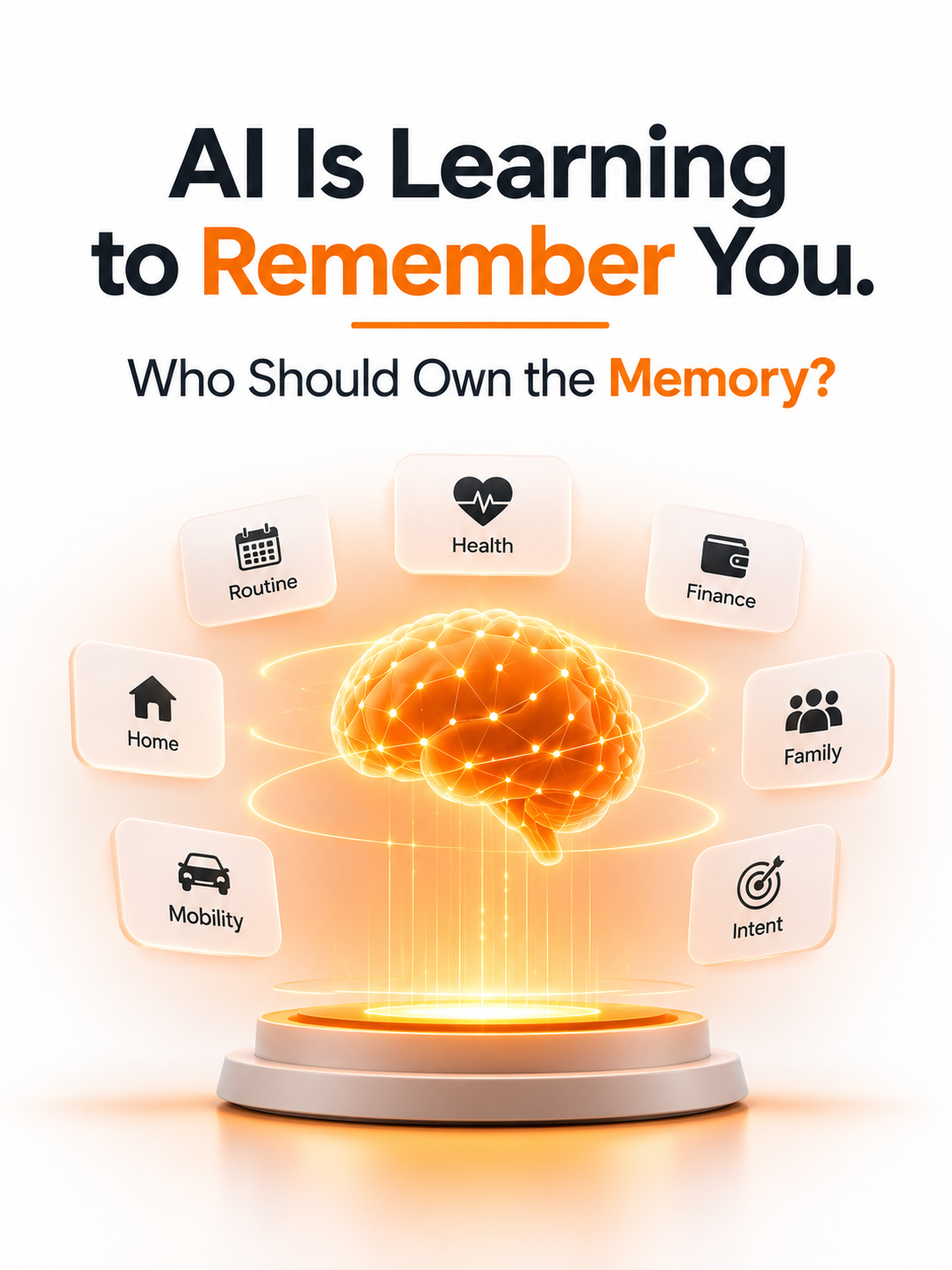
mEinstein explores user-owned AI memory, advocating privacy, correction and permission controls as persistent AI builds deeper representations of our lives.
BOSTON, MA, UNITED STATES, November 18, 2026 /EINPresswire.com/ — Artificial intelligence is moving beyond short-term conversations toward systems capable of retaining information and building context across extended periods. As persistent memory becomes an increasingly important part of AI development, questions surrounding data ownership, accuracy, privacy and user control are gaining attention.
OpenAI, Anthropic and Microsoft are among the organizations exploring long-term memory and context capabilities for AI systems.
OpenAI has expanded memory capabilities within ChatGPT to maintain useful information across conversations. Anthropic is researching how AI agents can capture experiences, consolidate relevant knowledge and correct inaccurate memories. Microsoft researchers are also exploring persistent context graphs and other architectures designed to support increasingly complex AI agents.
These developments reflect a broader shift in artificial intelligence. Systems designed to provide personalized assistance increasingly depend on information accumulated over time rather than isolated interactions.
However, persistent memory introduces questions that extend beyond technical capability. As AI systems develop increasingly detailed representations of individuals, the ownership, governance and permitted use of that information become important considerations.
“The industry is correctly recognizing that memory is essential to Personal AI,” said Prithwi Thakuria, Founder and CEO of mEinstein. “But at some point persistent memory stops looking like chat history and starts looking like a model of the person.”
Over extended periods, AI systems may accumulate information about preferences, goals, projects, routines, financial circumstances, family responsibilities and previous decisions. While individual data points may appear limited in significance, their combination can reveal patterns that provide deeper insight into an individual’s circumstances and intentions.
This accumulated context may eventually influence decisions and actions performed by increasingly capable AI agents.
Researchers and technology companies are therefore confronting several interconnected challenges: determining which memories remain relevant, correcting inaccurate inferences, identifying outdated information, establishing appropriate retention periods and controlling access by external systems.
The accuracy of persistent memory is particularly important. Research into agent memory has highlighted the possibility of inaccurate or outdated information becoming part of an AI system’s retained knowledge. Microsoft’s 2026 Digital Defense Report also identifies memory poisoning as an emerging security concern, where malicious information can become embedded in persistent context and influence subsequent agent behavior.
“Persistent memory needs more than storage,” Thakuria said. “It needs provenance, correction, verification, forgetting, permission and auditability.”
These considerations are also becoming relevant beyond consumer-facing AI applications.
As enterprises explore the use of AI-generated context, organizations in sectors such as financial services, healthcare and clinical research may seek access to information that helps evaluate eligibility, readiness or individual requirements.
However, access to a specific outcome does not necessarily require access to the complete personal history behind it.
For example, a financial service may require a verified readiness indicator, while a clinical research workflow may require a qualification result and authorization to contact an individual. Other applications may need only a narrowly defined set of approved information.
This distinction between access to information and permission to use it is becoming an important consideration in the development of Personal AI.
“My AI may understand something deeply about my life without automatically giving another company the right to know it,” Thakuria said.
mEinstein identifies this challenge through the concept of an Algorithmic Self-Portrait: an evolving digital representation of an individual’s real-world context, developed from information the individual has authorized an AI system to use.
The concept raises broader questions about how personal context should be maintained, verified and governed as AI systems become increasingly personalized.
The company also points to the emerging need for infrastructure that separates an individual’s private information from the specific context requested by external applications. This approach, described by mEinstein as Human Intelligence Infrastructure, focuses on establishing permission boundaries around how personal context is accessed and used by enterprise AI systems.
Such an approach does not necessarily require all AI processing to remain on individual devices. Cloud-based models may continue to play an important role in AI development. The central consideration is how persistent personal information, access permissions and decisions about external use are governed.
As AI memory capabilities advance, the conversation around artificial intelligence is expanding beyond model performance and computational capacity.
Long-term memory introduces a new dimension to the relationship between individuals and intelligent systems: the ability to build an increasingly detailed understanding of a person over time.
The development of persistent AI memory may therefore make data ownership, transparency, correction and consent central considerations in the next generation of artificial intelligence.
The question is no longer limited to how effectively an AI system can remember information. It increasingly concerns who controls that memory, how it is used and what safeguards govern its influence over future decisions.
Prithwi Thakuria
mEinstein
+1 703-517-3442
Legal Disclaimer:
EIN Presswire provides this news content “as is” without warranty of any kind. We do not accept any responsibility or liability
for the accuracy, content, images, videos, licenses, completeness, legality, or reliability of the information contained in this
article. If you have any complaints or copyright issues related to this article, kindly contact the author above.

Media gallery